What should you see at the Anthropology Museum?
A priority list for the Museo Nacional de Antropología: the Sun Stone, the Teotihuacán and Maya halls, Pakal's jade mask, the Olmec heads and the courtyard.
 By Diego Morales, Mexico City Museums Specialist & Cultural Guide
Twenty-plus halls, one afternoon, and a museum built so cleverly that the crowd drifts the wrong way through it. Most people enter the Museo Nacional de Antropología, turn right on instinct, and burn their freshest hour on the early cultures before they reach the objects they came for. A little planning fixes that. Here is what to see, and the order that puts the treasures in front of you while your feet still work.
What should you see at the Anthropology Museum?
Four things carry the visit: the Aztec Sun Stone in the Mexica hall, the full-scale Teotihuacán pyramid facade, the Maya hall with Pakal's tomb and jade mask, and the colossal Olmec heads. See those first, then wander the rest. The whole ground floor is archaeology, with a floor of living-peoples ethnography above.
The building fans out around a central courtyard, and the ground-floor halls run in a rough chronological ring. That layout tempts you to start at the beginning and work forward, but the star objects cluster in three or four rooms, so a highlights-first route beats a strict walk-through when your time is limited. Below, the pieces in the order we would take them.
Start with the Sun Stone in the Mexica hall
The Piedra del Sol is the object most people come for, a basalt monolith nearly twelve feet across, carved as calendar and cosmology in one, mounted at the head of the Mexica hall so the whole room funnels toward it. Around it stand the towering Coatlicue statue and a stone model of the great temple of Tenochtitlan.
Go here first, before the tour groups thicken. This is the most-visited museum in the country, and our look at why it draws the biggest crowds explains the pull. The Mexica hall is the largest and most dramatic on the ground floor, and seeing the Sun Stone with room to breathe sets the tone for everything after. Give it real time: the carving rewards a slow look, and the surrounding Aztec sculpture, the coiled serpents and the vast Coatlicue, is nearly as strong. This one room justifies the ticket on its own.
The Teotihuacán hall and its full-scale pyramid facade
Next door, the Teotihuacán hall rebuilds part of the feathered-serpent pyramid at full scale, painted and plastered the way the ancient city looked around fifteen hundred years ago. Stone serpent heads jut from the reconstructed facade, and a replica of the great goddess mural gives the room its color.
This hall does something a case of artifacts cannot: it shows you architecture, the sheer scale of the metropolis that stood north of the modern city. The pyramids themselves survive at the real ancient city of Teotihuacán, a UNESCO site and a popular day trip, so this hall doubles as a preview if you plan to go. Our full guide to the day trip out to the Teotihuacán pyramids covers getting there and what to book. Note that at the site the pyramids cannot be climbed in 2026, which makes the reconstruction here a rare chance to stand close to the feathered-serpent facade.
The Maya hall, Pakal's tomb and the jade mask
The Maya hall is where visitors slow right down. A staircase descends to a reconstruction of the burial chamber of King Pakal from Palenque, and the jade mosaic mask laid over his face is one of the great treasures of the Americas. Above ground, stelae, ceramics and a temple model fill out the Maya world.
The descent to the tomb is the theatrical moment of the museum, a cool, dim chamber that lands very differently from a lit gallery. The jade mask alone is worth the walk to the far end of the ground floor, and the Maya ceramics and glyph panels around it reward a second lap if you have the energy. Pair this room with the Sun Stone and the Teotihuacán facade and you have seen the museum's core, whatever else you fit in.
The Olmec heads, the courtyard and the upper floor
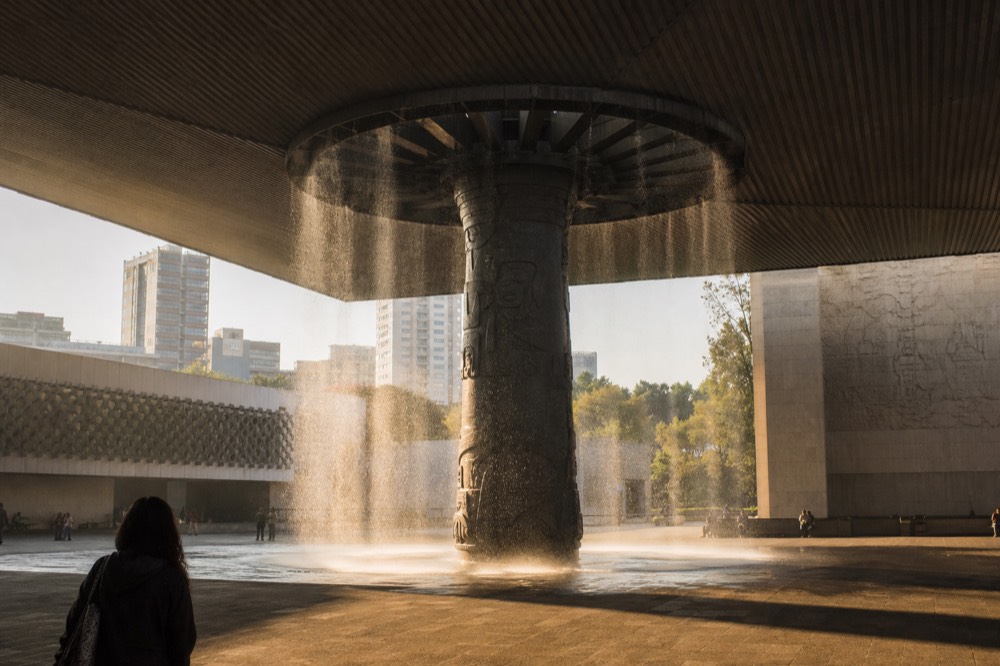
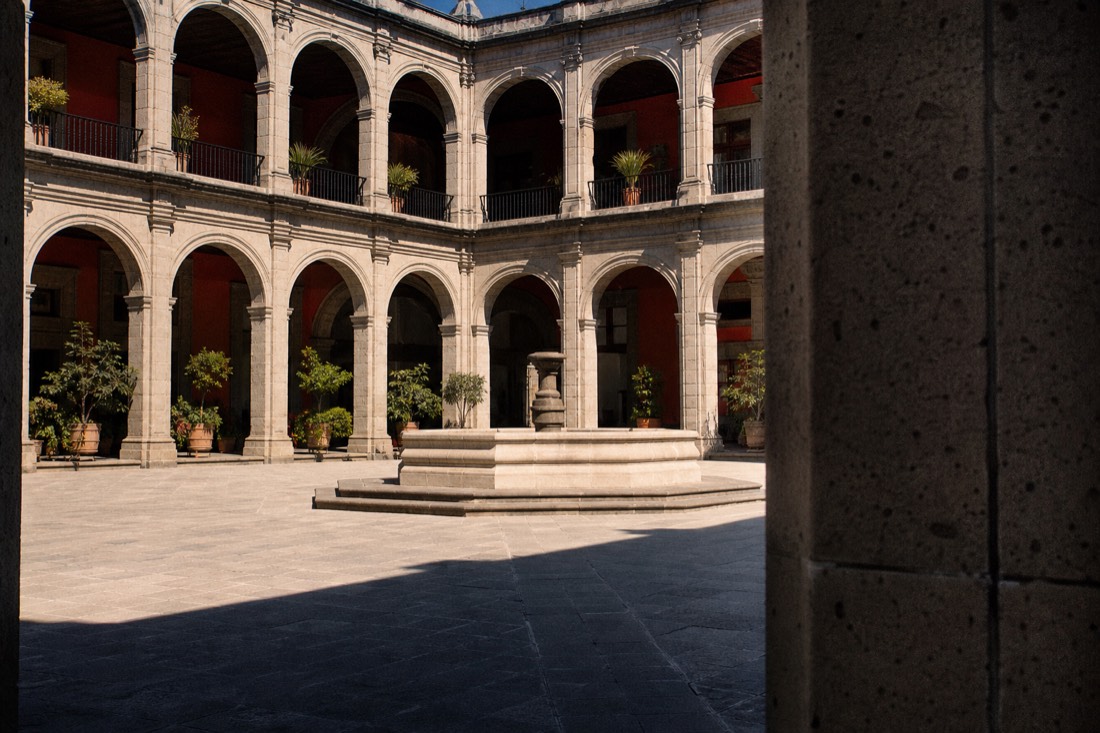
Do not miss the colossal Olmec heads, each carved from a single basalt boulder and the oldest monumental sculpture in the collection, over in the Gulf Coast hall. Outside the halls, the courtyard's concrete canopy pours water from one column, and the entire upper floor turns to the living peoples of Mexico.
The Olmec heads are easy to skip because they sit away from the headline rooms, which is a mistake: they are older than everything else here and unforgettable in person. When your legs give out, the courtyard is the place to reset, and it is one of the most photographed spots in any of the Mexico City museums. If time and energy remain, the upstairs ethnography floor, with textiles, masks and reconstructed village dwellings, shows that these cultures are living rather than only ancient. Most visitors run out of stamina before they reach it, so treat it as the bonus round.
A fast priority order when time is short
If you have only ninety minutes, do this: Sun Stone and the Mexica hall, then Teotihuacán, then the Maya hall for Pakal's mask, then the Olmec heads on the way out. That covers the four things nobody should leave without, and skips the halls you can afford to miss on a first visit.
Here is the same route as a quick reference. For a fuller breakdown of timing, see our note on how long you actually need, and for the honest overall verdict, whether the museum is worth it.
| Priority | Hall | What to see |
|---|---|---|
| 1 | Mexica | The Sun Stone, Coatlicue, the temple model |
| 2 | Teotihuacán | The full-scale feathered-serpent facade |
| 3 | Maya | Pakal's tomb and the jade mask |
| 4 | Gulf Coast | The colossal Olmec heads |
| 5 | Courtyard and upper floor | The canopy, then ethnography if time allows |
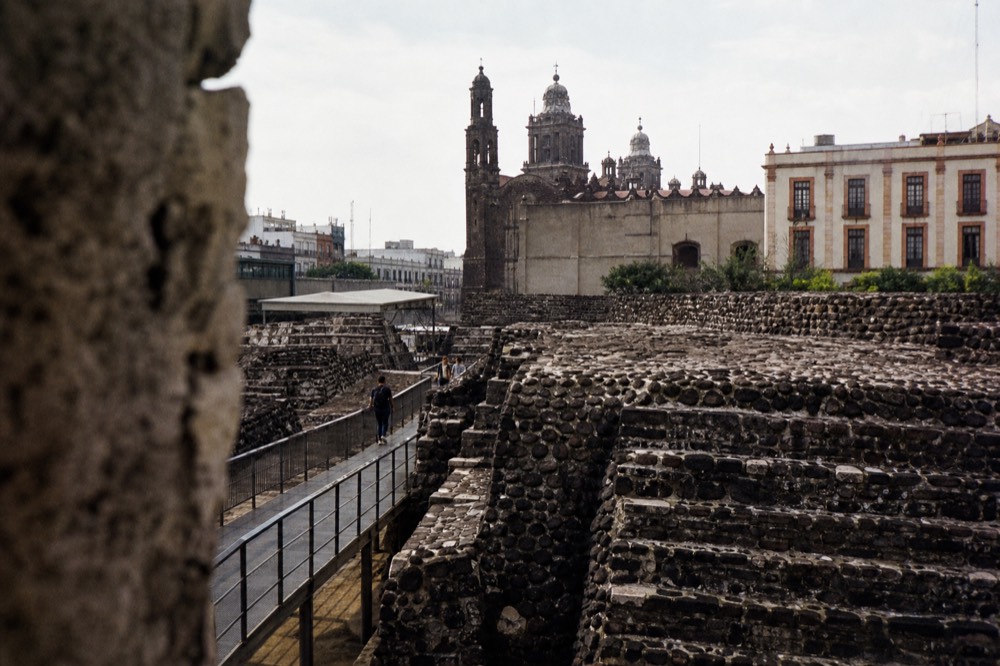
The Aztec story continues a short drive away at Templo Mayor, the excavated great temple by the Zócalo, which makes an easy pairing on the same trip; reserve on the Templo Mayor entry page. For hours before you go, check the official museum site, and for how this museum fits a wider plan, our shortlist of the museums worth your time puts it in order.
Seen in this order, the collection stops feeling like a marathon and starts feeling like a greatest-hits set with the classics up front. Book a timed slot, take the four core halls slowly, and let the rest be whatever you have appetite for once the treasures are behind you.